
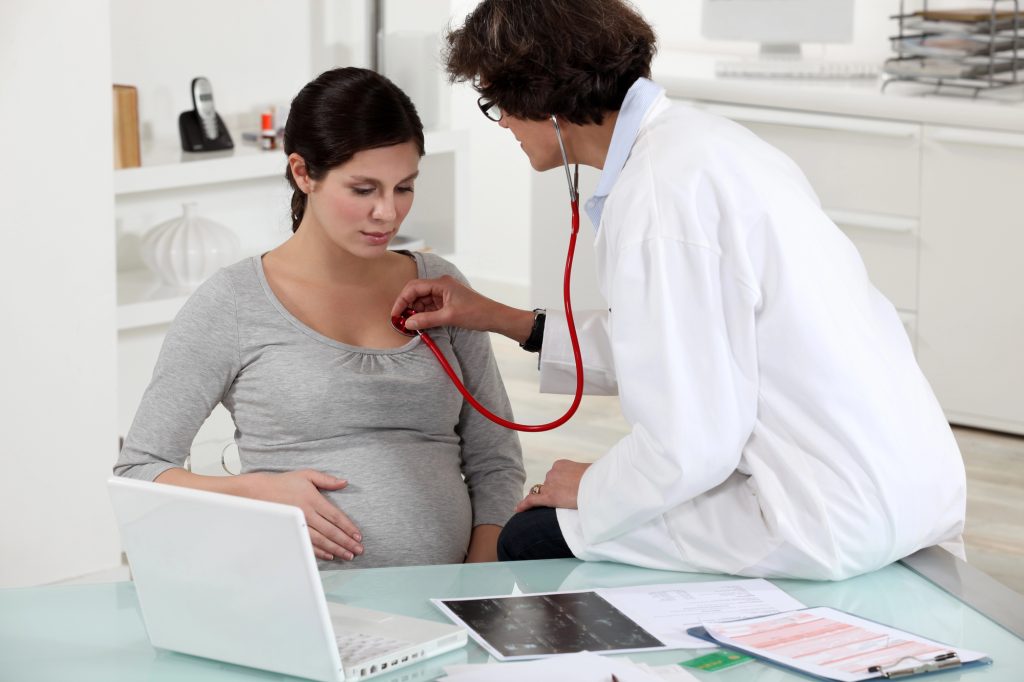
Pregnancy heart health is an under-recognized category in maternal care. Many women are unaware of the frequency of pregnancy complications related to heart disease, or the fact that these complications can occur in expectant mothers of any age. Sadly, many healthcare providers are themselves inclined to dismiss symptoms that occur in seemingly healthy women, even those who are carrying a child. At Firecrest Injury Law, we too often encounter women whose health has been compromised by medical negligence during what should have been a happy period of their lives. We are committed to advocating for improvements in maternal care and an increased awareness of pregnancy complications that can affect women’s heart health over the longer term. Call our New Mexico office at 505-218-9949 today to learn more.
Women’s Heart Health Risks
Many women underestimate their own lifetime risk of cardiovascular disease (CVD). A 2017 study published in the Oxford Journal of Public Health and publicly availing in the United States through PubMed, found that the women surveyed for the researcher were likely to estimate their lifetime risk of breast cancer as greater than that of heart disease, when in fact data provided by the American Heart Association (AHA) show that heart disease kills about one in every three women, compared to roughly one in 32 for breast cancer.
Such misunderstanding can have profound implications for how women protect and manage their own heart health. Particularly for younger women, who are dramatically more likely than men to be sent home without diagnosis or treatment after an initial cardiac event – according to a fact sheet from the National Heart, Lung, and Blood Institute – underestimation of personal risk can make women less likely to suspect heart disease in their own situations, and correspondingly less likely to advocate for themselves in medical settings. This reluctance can cost precious time when a woman is experiencing an acute cardiac event, or suffering from preeclampsia, which can rapidly worsen into an emergency situation if left unchecked.
Heart Health Risks During Pregnancy
An estimated 10% of expectant mothers will experience a heart-related condition, such as preeclampsia, during their pregnancies, according to the AHA. Generally emerging in the later stages of pregnancy and often lingering through the postpartum period – or even, as the Mayo Clinic explains, developing in the days to weeks after delivery as postpartum preeclampsia – preeclampsia is a pregnancy-related complication whose hallmark is a potentially severe elevation in blood pressure (frequently accompanied by other complications, such as renal dysfunction). Women who experience preeclampsia or other heart-related pregnancy complications during their pregnancy journeys may also be more likely to develop other cardiac complications later in life, but in many ways the risks posed by preeclampsia are more immediate. While cases do vary in their severity, blood pressure in preeclampsia can quickly progress from merely “elevated” to “dangerously high,” in some cases triggering stroke even in young, otherwise healthy women.
Pregnancy itself obviously puts a strain on a woman’s entire body, including her heart. In addition to preeclampsia, various forms of pregnancy-related cardiomyopathy may also develop. The most appropriate treatment protocol will depend on the precise type of cardiomyopathy involved and the severity of cardiac damage in the individual case, but as a general rule any potential weakening or other pathology of the heart muscle bears close medical monitoring. The tragic reality, however, is that many women, and in some cases even their medical teams, are underprepared to recognize the early warning signs of heart-related pregnancy complications – potentially resulting in cases of medical negligence that delay treatment and worsen outcomes for women and their families. A maternity health attorney with Firecrest Injury Law may be able to explain more in a personalized consultation.
Heart Health Risks Throughout a Woman’s Life
The physical demands placed on the heart during pregnancy and childbirth can be so extreme that heart complications are the leading cause of maternal death – usually defined as death within one year of pregnancy or childbirth, to account for the sometimes extended postpartum recovery period – throughout the United States, but these acute events do not fully cover all of the implications of pregnancy heart health. A 2018 study published by the British Heart Society and made available to residents of the United States through PubMed found that all of the following were associated with an increased incidence of CVD over the course of a woman’s life:
- Early menarche (first period)
- Early menopause
- Maternal age at first birth (women who were younger when they had their first child were at higher risk)
- Miscarriage or stillbirth
- Hysterectomy (a common surgery in which the uterus is removed from the abdominal cavity)
Separately, a 2022 Frontiers in Public Health and available through PubMed Central (a service of the National Library of Medicine) found that women who experienced gestational diabetes were at increased risk of heart failure, coronary heart disease, and stroke, throughout their lifetimes. While not all pregnancy complications are preventable, many are treatable and manageable – but the effectiveness of medical interventions often depends, in part, on the stage of disease progression in which they are diagnosed and treatment is begun. Chronically underperforming maternal care that leads to delayed diagnoses can therefore weigh against the efficacy of otherwise robust treatment options, making medical medical negligence in maternal care scenarios a serious threat to pregnancy heart health that potentially increases a woman’s lifelong risks for various forms of heart disease.
Speak With a Maternity Health Lawyer
An under-appreciation of how pregnancy complications can affect women’s heart health continues to plague maternal care in the United States. Many expectant mothers in New Mexico face substantial challenges in accessing appropriate care, and in the worst cases their long-term health outcomes may be adversely affected by medical negligence during their pregnancies and postpartum recoveries. The experienced Albuquerque maternity health advocates at Firecrest Injury Law are here to listen to patients’ stories and discuss possible solutions. Call 505-218-9949 today to schedule a consultation.