
Why patient safety, emergency preparedness, and quality of care must be part of the conversation about rural healthcare in New Mexico.
By Erin M. Marshall, Founder and Managing Attorney of Firecrest Injury Law
When we talk about healthcare access in New Mexico, the conversation often begins with numbers: How many hospitals are still open? How many physicians are practicing in rural communities? How far must patients travel to receive medical care?
These are important questions. But they do not tell the whole story.
A patient may have a hospital nearby and still lack access to the care they need. A community may have a physician on staff but lack the clinical support, equipment, or emergency systems necessary to manage a serious complication.
And a healthcare facility may remain open while struggling to provide the level of care its patients reasonably expect.
Healthcare access is not simply about whether care is available. It is also about whether that care is safe, timely, and appropriate.
This was one of the central points I raised during the maternal healthcare access panel at The Collapse of Care: Addressing Rural Healthcare Access, Federal Funding, and the Future of New Mexico Care, the 2026 Symposium hosted by the New Mexico Law Review and Tribal Law Journal at the University of New Mexico School of Law.
My perspective comes from two professional experiences that are closely connected: more than 20 years working in public health and healthcare quality improvement, and my current work as a New Mexico medical negligence attorney.
Both have taught me that improving healthcare requires us to look beyond the availability of services and examine what happens when patients actually receive care.
What Happens When Routine Medical Care Becomes an Emergency?
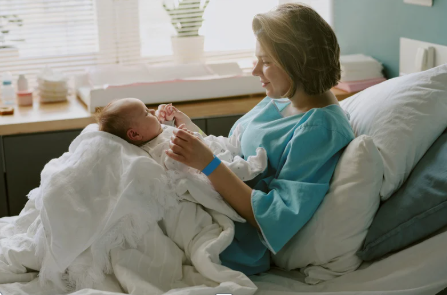
Consider a pregnant woman receiving care at a rural hospital.
Her pregnancy may have been uncomplicated. She may have received appropriate prenatal care and arrived at the hospital expecting a routine delivery.
But childbirth can change quickly.
A patient may experience a severe hemorrhage, dangerously elevated blood pressure, infection, or another complication requiring immediate medical intervention.
At that moment, the important questions are no longer limited to whether the hospital is open or whether a clinician is present.
We need to ask:
- Was the complication recognized promptly?
- Did the clinical team have the training and resources necessary to respond?
- Were appropriate emergency protocols in place?
- Was additional expertise available when needed?
- If the patient required a higher level of care, could she be stabilized and transferred safely and without unnecessary delay?
The answers can make an enormous difference in patient outcomes.
These questions also apply beyond obstetrics. Patients undergoing surgery, receiving emergency treatment, or being evaluated for potentially serious medical conditions depend on healthcare professionals and systems that can recognize complications and respond appropriately.
A facility’s ability to provide routine care does not necessarily establish its ability to manage every emergency.
Rural Healthcare Providers Face Extraordinary Challenges
New Mexico’s rural healthcare challenges are substantial.
Many communities struggle to recruit and retain physicians, nurses, and other healthcare professionals. Some facilities operate with limited staffing, restricted access to specialists, and significant financial pressures.
Clinicians may work long shifts without reliable backup. They may be responsible for patients with a wide range of conditions while having limited opportunities to consult colleagues or obtain additional clinical support.
These realities deserve serious attention.
It is neither realistic nor fair to expect a small rural hospital to have the same resources as a major academic medical center.
But that does not mean patient safety becomes less important in rural communities.
It means healthcare systems must be especially thoughtful about what services they can safely provide, how they prepare for emergencies, and when patients need consultation or transfer to a higher level of care.
The goal should not be to demand that every rural facility do everything. It should be to ensure that every facility can provide the services it undertakes safely and recognize when a patient needs more.
Patient Safety Depends on Systems, Not Just Individual Clinicians
One of the most important lessons from my years in healthcare quality improvement is that good outcomes depend on more than the knowledge and skill of an individual provider.
Healthcare is delivered through systems.
Those systems include staffing, clinical protocols, communication, supervision, equipment, documentation, consultation, and follow-up.
For example, a hospital may have a written protocol for managing maternal hemorrhage. But the existence of a protocol does not establish that the clinical team is prepared to implement it.
Have staff members been trained?
Have they practiced responding together?
Are necessary medications, blood products, and equipment available?
Does everyone understand who is responsible for making critical decisions?
What happens if the first intervention does not work?
These are the kinds of questions healthcare quality improvement professionals ask because patient safety requires more than good intentions or written policies.
It requires reliable processes that function when patients need them.
Healthcare Quality Requires Continuous Improvement
Before becoming an attorney, I spent more than two decades working in public health and healthcare quality improvement.
My work included educating healthcare providers about standards of care, conducting hospital audits against established quality benchmarks, and helping healthcare organizations identify opportunities to improve clinical practice.
That experience taught me that healthcare quality is not something an organization achieves once and then maintains automatically.
Medical knowledge evolves. Clinical guidelines change. Staff members come and go. New technologies and treatments become available.
Healthcare organizations must continually evaluate whether their practices remain appropriate and whether their systems are producing safe, effective care.
That requires ongoing education, meaningful performance measurement, and a willingness to learn from errors and adverse events.
It also requires giving healthcare professionals the time and support necessary to improve.
During the symposium, I emphasized another concern that is particularly relevant to rural New Mexico:
We cannot demand continuous improvement from rural healthcare providers while denying them the time, backup, and professional connections necessary to improve.
A clinician working long shifts with limited coverage may have little opportunity to attend continuing education, discuss difficult cases with peers, or practice updated clinical skills.
Programs such as New Mexico’s Project ECHO demonstrate how virtual, case-based learning can help connect clinicians with specialists and colleagues.
But technology alone cannot replace adequate staffing, protected education time, hands-on training, or the professional relationships that help clinicians maintain and strengthen their skills.
If we expect healthcare providers to meet evolving standards, we must also invest in the systems that help them do so.
What Happens When Healthcare Falls Below the Standard of Care?
My work today as a medical negligence attorney brings a different perspective to these same issues.
When a patient suffers a serious injury during medical treatment, one of the central legal questions is whether the healthcare professionals involved met the applicable standard of care.
That question is fact-specific.
An unexpected complication does not automatically mean that medical negligence occurred. Some complications arise even when healthcare professionals provide appropriate treatment.
The legal analysis requires examining what happened, what care was reasonably required under the circumstances, whether a provider departed from the applicable standard, and whether that departure caused injury.
Sometimes the relevant issues involve a delayed diagnosis, failure to recognize a complication, inadequate monitoring, communication problems, or an inappropriate delay in treatment or transfer.
Medical negligence litigation and healthcare quality improvement serve different purposes.
Quality improvement looks prospectively and systematically at how healthcare organizations can prevent harm and improve performance.
Medical negligence litigation examines the care provided to an individual patient and can offer accountability and compensation when negligence causes injury.
Both perspectives reinforce the importance of clear clinical standards and reliable systems of care.
We Must Measure More Than the Number of Hospitals and Providers
New Mexico needs policies that support rural hospitals, expand healthcare access, and help communities recruit and retain clinicians.
But those efforts should be accompanied by meaningful attention to healthcare quality and patient safety.
During the symposium, I made this point:
We cannot solve the rural healthcare crisis by measuring only how many providers we recruit or how many facilities remain open. We also have to measure the quality and safety of the care those facilities deliver.
That means asking whether facilities are prepared for emergencies, whether patients receive appropriate and timely treatment, whether transfer systems work, and whether healthcare organizations are identifying and addressing opportunities for improvement.
It also means listening to patients and families about their experiences.
A successful healthcare system is not simply one in which services exist.
It is one in which people can obtain appropriate care and reasonably rely on the systems responsible for delivering it.
Building a Safer Future for New Mexico Patients
The future of healthcare in New Mexico requires us to address several challenges at once.
We must strengthen the healthcare workforce, support rural facilities, improve access to specialists, and make it possible for clinicians to maintain their skills and knowledge.
We must also ensure that healthcare organizations have effective systems for recognizing complications, responding to emergencies, and learning from adverse outcomes.
And when patients suffer injuries because healthcare professionals fail to meet applicable standards of care, meaningful accountability remains important.
These goals are not in conflict.
Supporting healthcare providers and protecting patients are complementary responsibilities.
Access without quality is not meaningful access.
As New Mexico works to preserve and expand healthcare services, patient safety must remain central to the conversation.
About Firecrest Injury Law
Firecrest Injury Law represents individuals and families in New Mexico who have suffered serious injuries, including injuries involving medical negligence, maternal healthcare, birth injuries, and other forms of personal injury.
Attorney Erin M. Marshall brings a distinctive perspective to medical negligence cases through more than 20 years of experience in public health, healthcare quality improvement, and provider education.
If you or a family member has experienced a serious injury that you believe may have resulted from medical negligence, schedule a consultation with Firecrest Injury Law.
An unexpected medical outcome does not necessarily indicate negligence. Whether a claim exists depends on the specific facts, applicable law, and appropriate professional evaluation.